
The ECYBRIDGE International Conference unfolded over three dynamic days, bringing together thought leaders, innovators, and policymakers to shape the future of Europe’s cybersecurity. It was more than a series of panels—it was a strategic dialogue on resilience, innovation, and cooperation in an increasingly complex digital landscape.
Day 1: Europe’s Cyber Resilience – From Strategic Vision to Collective Action
Last week, the ECYBRIDGE International Conference opened with a powerful message: Europe must strengthen its cyber resilience in the face of an increasingly complex and fragmented threat landscape. Day 1 brought together leading experts, policymakers, and innovators for a full day of strategic dialogue, technical insights, and collaborative thinking.
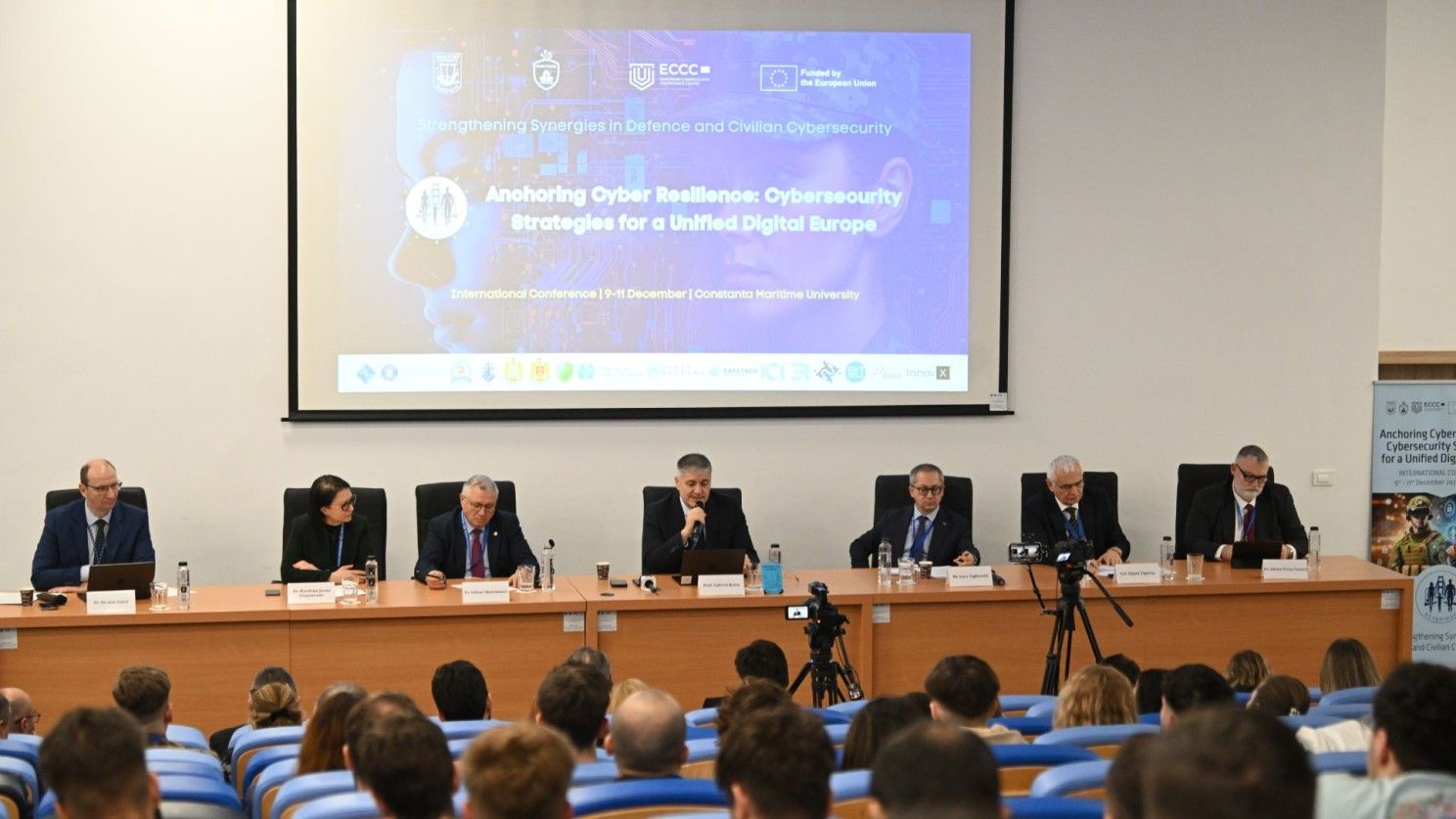
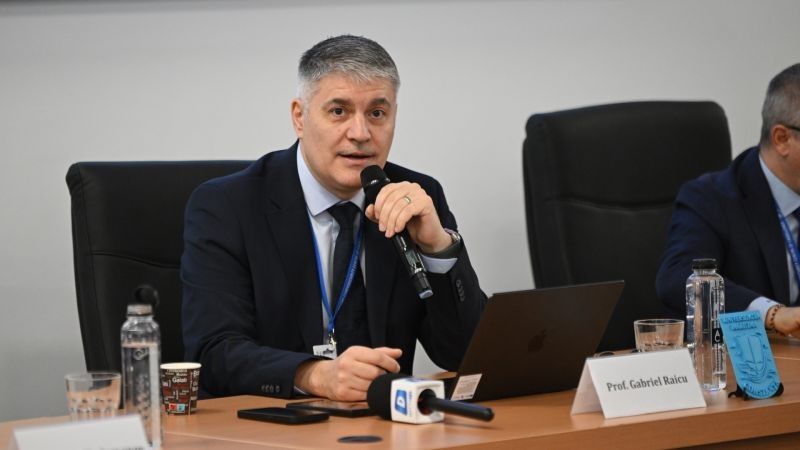
The day began with an inspiring introduction by Professor Gabriel Raicu , who framed the urgency of addressing hybrid threats and safeguarding critical infrastructure. His remarks set the tone for discussions that would span governance, technology, and operational readiness.
The Opening Panel, chaired by Dr. Nicu Iancu , featured distinguished voices including Mr. Luca Tagliaretti , Dr. Velizar Shalamanov , Dr. Victor Vevera , Col. Danut TIGANUS , and Dr. Jeni Cimpineanu . Together, they explored how Europe can anchor cyber resilience in a fragmented threat environment, moving from strategic vision to actionable frameworks. The conversation emphasized the need for interoperability, trust, and coordinated efforts across civilian and defence domains—an essential step in countering hybrid threats that blur traditional boundaries.
Following this, Dr. Velizar Shalamanov delivered a keynote that examined the strategic imperatives of cybersecurity governance and the role of NATO and EU cooperation in shaping a secure digital future. His insights highlighted the importance of aligning national strategies with European frameworks to ensure resilience at scale.
The momentum continued with Panel 2, chaired by Mr. Iulian Alecu, which brought together Ms. Ana Maria Busoniu , Captain (Navy) Professor Miroslav Tsvetkov , Captain (Navy) (ret) Helder Fialho Jesus , LtCol. David Antunes, Col. (ret) Professor Roceanu Ion , Ms. Eliza Vaș , and Col. Professor Ion Bica. This session focused on EU cybersecurity governance, the practical challenges of NIS2 implementation, and the growing need for civilian–defence synergies. Discussions underscored that regulatory alignment and operational cooperation are critical to mitigating risks in sectors such as energy, transport, and defence.
In the afternoon, innovation took center stage with project presentations by Dr. Emil Simion (TrustBoost – Safetech Innovations ) and Professor Gabriel Raicu (CYRESRANGE). These projects showcased cutting-edge approaches to building trust in digital ecosystems and enhancing cyber training capabilities. Strategic perspectives continued with keynote addresses from Professor Iulian Chifu and Ms. Ana Maria Busoniu, who stressed the importance of integrating policy, technology, and education to prepare for emerging threats.
The day concluded with Workshop 1, led by Mr. Iulian Alecu and Dr. Maria Gurau, focusing on dual-use technologies and AI-powered threat detection. Participants explored how artificial intelligence can accelerate threat identification and response, while dual-use innovation ensures adaptability across both civilian and defence applications.
Finally, Dr. Valeria Popescu presented the ECYBRIDGE White Paper Key Findings, offering a comprehensive analysis of cybersecurity trends across the EU. Her presentation highlighted pressing issues such as hybrid threat escalation, regulatory harmonization, and the strategic role of innovation in resilience-building.
Day 1 was more than a series of panels—it was a call to action. The discussions reinforced that Europe’s cyber resilience depends on collaboration, coordination, and a shared commitment to innovation and governance. With hybrid threats on the rise and critical infrastructure increasingly exposed, the need for a unified approach has never been more urgent.
Day 2: Innovation, Workforce Readiness, and Future Cyber Defence
Last week, Day 2 of the ECYBRIDGE International Conference unfolded as a deep dive into the technologies, skills, and strategies shaping Europe’s cyber resilience. Hosted by TalTech Estonian Maritime Academy and Antwerp Maritime Academy , the day brought together experts from academia, industry, and defence to explore how innovation and workforce development can secure Europe’s digital future.
The morning opened with Panel 3, chaired by Professor Sanja Bauk and featuring Professor Rain Ottis, Mr. Gabor Visky, Mr. Dan Heering, and Mr. Ricardo Gregorio Lugo. Their discussion focused on autonomous capabilities and cross-sector integration, highlighting how maritime and transport sectors are becoming critical arenas for cybersecurity innovation. The panel examined the operational challenges of embedding advanced technologies into both civilian and defence environments, stressing that resilience requires not only technical solutions but also governance frameworks that enable interoperability.
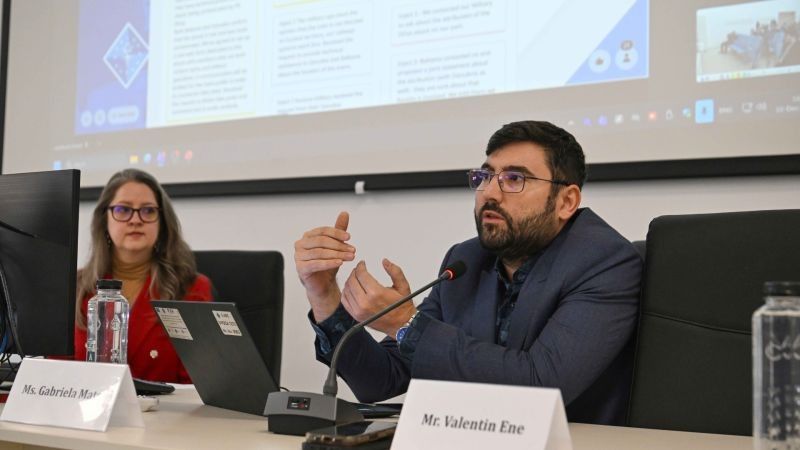
Following this, the spotlight turned to ECYBRIDGE TTX Key Findings, presented by Dr. Jeni Cimpineanu, Ms. Gabriela Matei, and Mr. Valentin Ene. Their analysis revealed Europe’s current level of readiness to counter hybrid threats and manage future crises. The findings underscored gaps in coordination between civilian and defence actors and emphasized the need for scenario-based exercises to strengthen response capabilities.
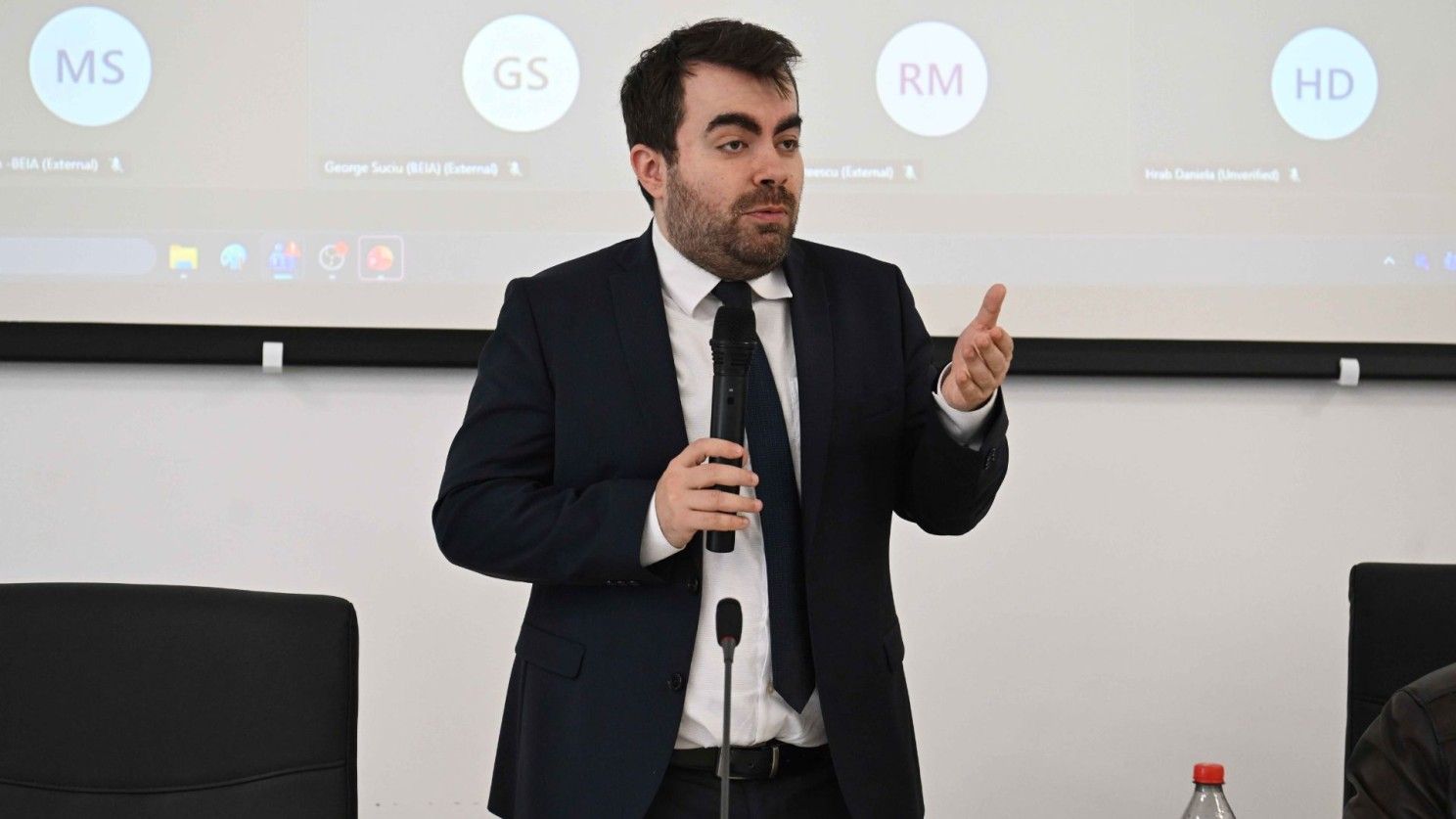
The morning continued with Workshop Key Findings, delivered by Dr. Alexandru Georgescu, who addressed the strategic imperative of harmonizing civilian and defence cybersecurity paradigms. His insights highlighted that fragmented approaches leave critical infrastructure vulnerable, and only integrated strategies can ensure resilience against sophisticated adversaries.
Before lunch, Panel 4, hosted by Antwerp Maritime Academy and chaired by Mr. Yves Van Seters, shifted the focus to workforce readiness and digital skills. Speakers Ms. Noëmie Honore, Professor Georges Ataya, Mr. David De Roock, and Mr. Joost Daem explored how Europe can build a talent pipeline capable of meeting evolving strategic demands. Discussions emphasized that cybersecurity is not just a technical challenge—it is a human challenge. Without skilled professionals, even the most advanced technologies cannot deliver security at scale.
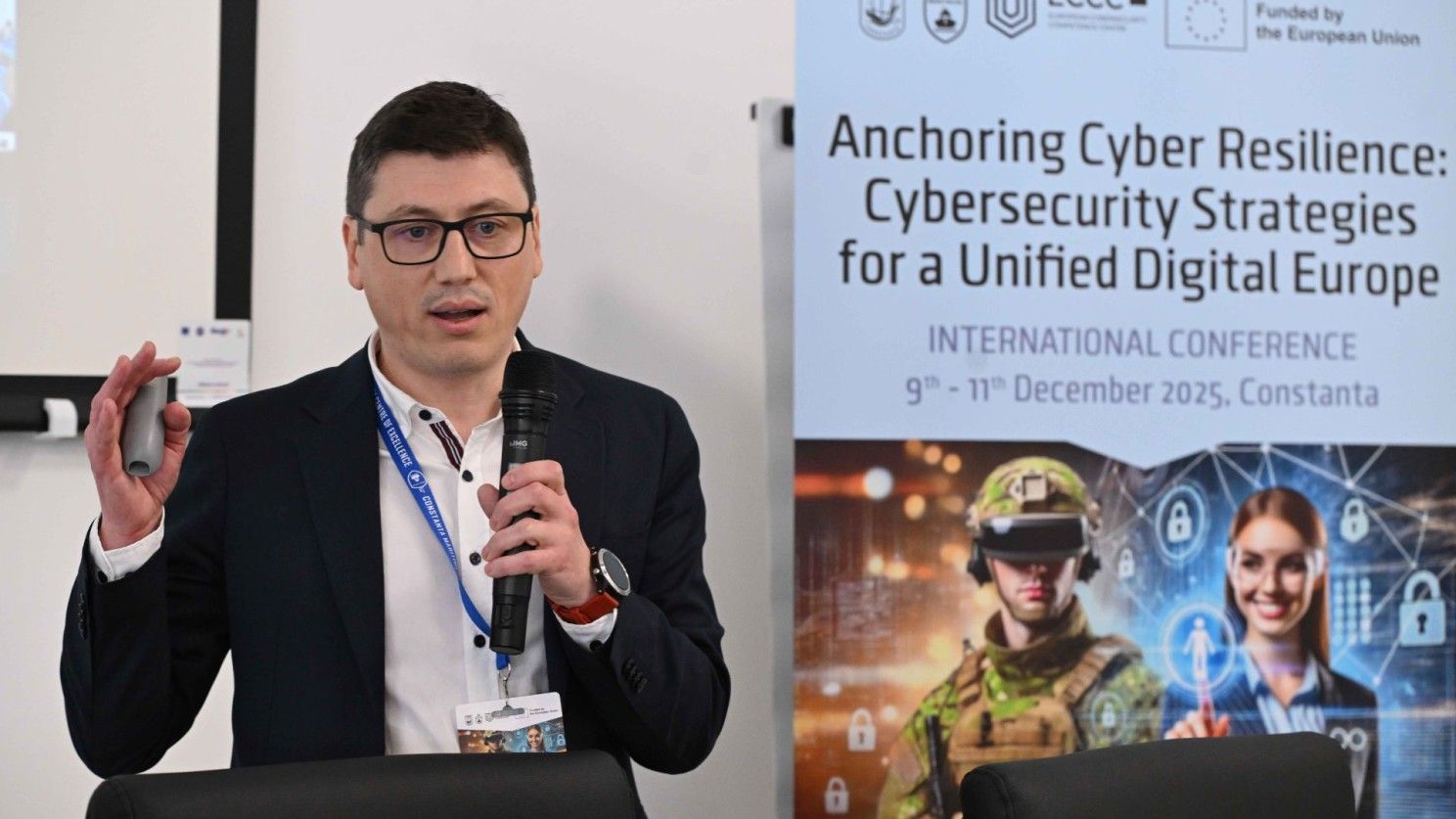
The afternoon brought technology presentations, including a compelling showcase by Mr. Bogdan George Carp (BIT SENTINEL), who demonstrated innovative approaches to threat detection and incident response. These sessions illustrated how dual-use technologiesand AI-driven solutions are transforming the cybersecurity landscape, enabling faster, smarter, and more adaptive defence mechanisms.
Keynote speeches by Ms. Rocío Ortiz and Captain (Navy) (ret) Helder Fialho Jesus provided a forward-looking perspective on future industries, cyber defence strategies, and the Euro-Atlantic digital ecosystem. Both speakers reinforced the urgency of preparing for tomorrow’s challenges today, through investments in innovation, education, and cross-sector collaboration.
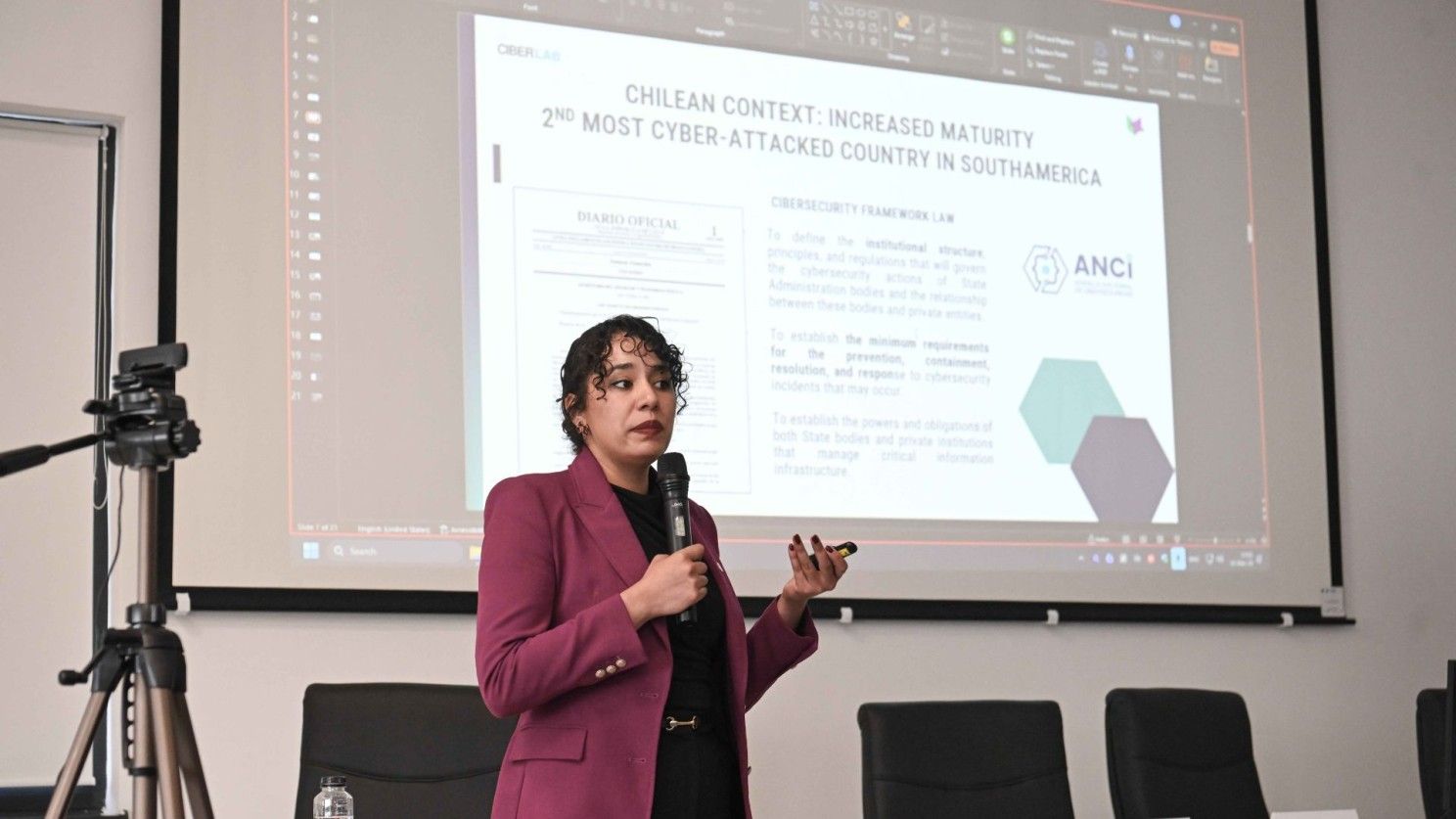
The day concluded with Workshop 2, led by Mr. Dan G., which examined AI-enhanced cyber defence for critical infrastructure. This interactive session demonstrated how artificial intelligence can accelerate threat detection and response, offering a glimpse into the future of proactive cybersecurity.
Closing remarks by Dr. Nicu Iancu, ECYBRIDGE Coordinator, tied together the day’s themes: strategic innovation, workforce development, and operational readiness. Day 2 reaffirmed that Europe’s cyber resilience depends on a dynamic interplay between cutting-edge technology and a skilled workforce—two pillars that must evolve together to safeguard a unified digital Europe.
Day 3: Cybercrime, Hybrid Conflicts, and Europe’s Strategic Readiness
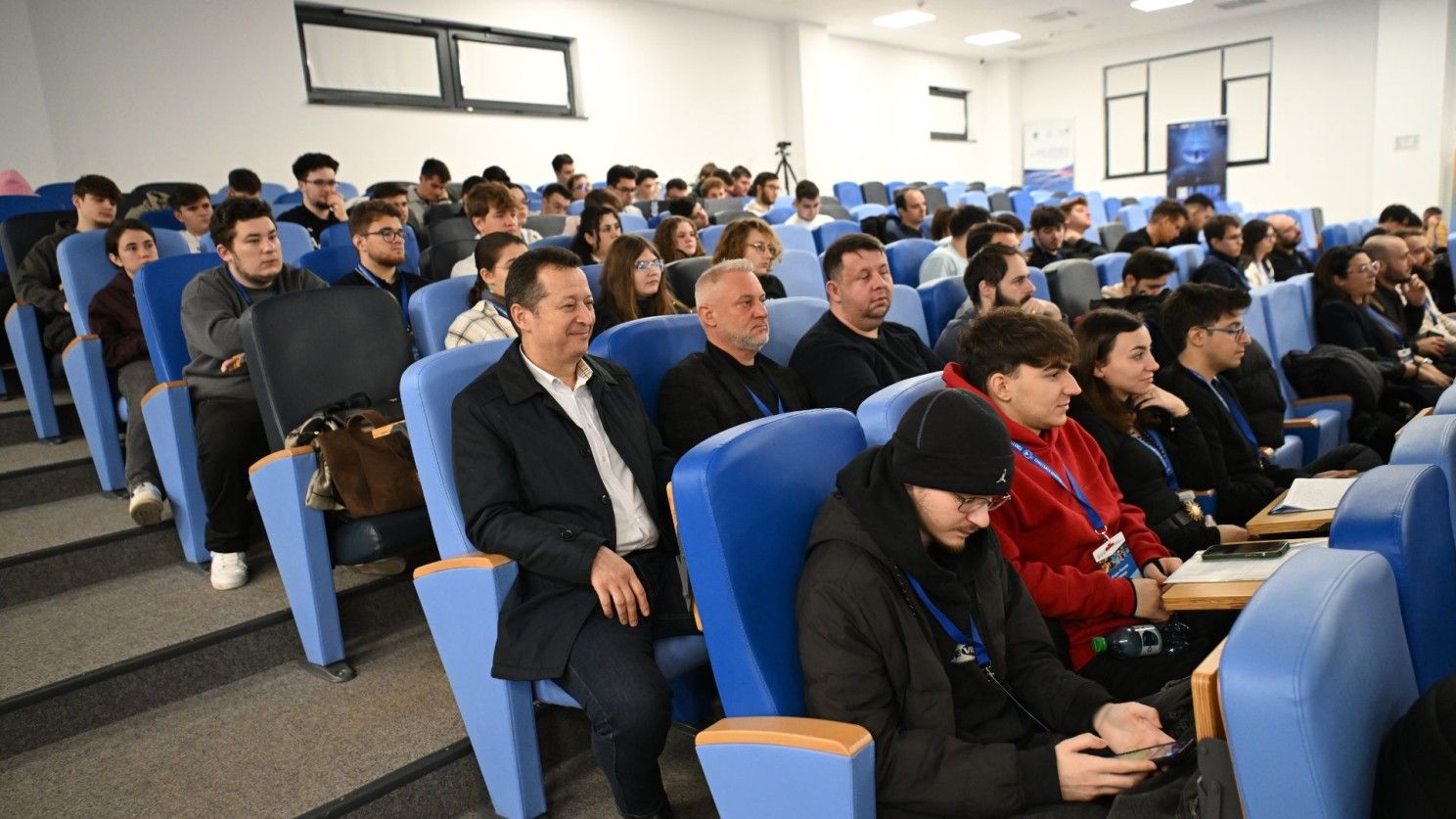
The final day of the ECYBRIDGE International Conference marked a culmination of three days of intense dialogue, focusing on some of the most pressing challenges in Europe’s digital security landscape: cybercrime, hybrid conflict dynamics, dual-use innovation, and the continent’s evolving readiness in an increasingly complex security environment.
We opened the day with Panel 5, chaired by Professor Vasile Drăghici, which brought together Prof. habil. Constantin Duvac, Senior Lecturer Remus Jurj, Ph.D., Senior Lecturer Dimitar Nikolov , Ph.D., Senior Lecturer Iliyan Iliev, and researcher Dimitar Dimitrov . Their discussion tackled the growing sophistication of cross-border cybercrime and the urgent need for synchronized legal and operational responses across jurisdictions. The panel highlighted that cybercrime is no longer a localized issue—it is a transnational threat requiring multi-sector resilience, harmonized legislation, and real-time intelligence sharing between law enforcement, private sector actors, and defence institutions.
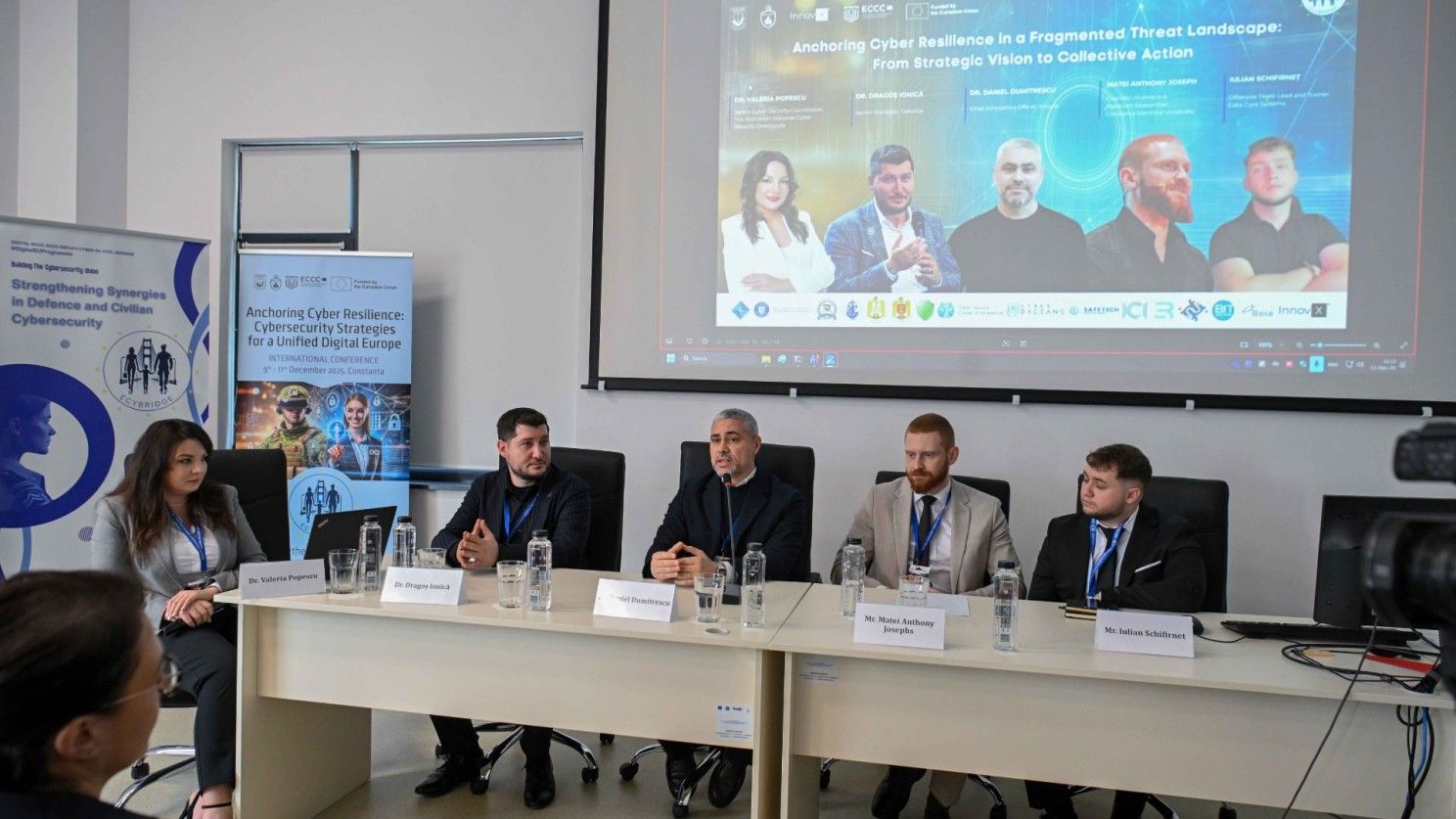
Next, Panel 6, chaired by Dr. Valeria Popescu, shifted the focus to Euro-Atlantic cooperation and competition in dual-use technology innovation. Speakers Dr. Dragos Ionica , Dr. Daniel Dumitrescu, PhD., Mr. Matei Anthony Josephs , and Mr. Iulian Schifirnet explored the strategic implications of technological sovereignty and the race to develop dual-use capabilities that serve both civilian and defence needs. The conversation underscored that innovation in areas such as AI, quantum computing, and autonomous systems is not just a technological challenge—it is a geopolitical one, shaping Europe’s position in the global security architecture.
Later in the morning, an in-depth session led by Mr. Matei Anthony Josephs examined Hybrid Conflict Dynamics and National Cyber Readiness, featuring DNSC Deputy Director Stelian Cristea , CMU Rector Prof. Gabriel Raicu , MarCySCoE VP Dr. Nicu Iancu , Dr. Mircea-Constantin Scheau , and EY Technology Consulting Director Mr. Adrian Marinescu . This discussion revealed how hybrid threats—combining cyberattacks, disinformation, and kinetic operations—are redefining national security strategies. Speakers emphasized the need for early-warning systems, public-private partnerships, and continuous training to ensure resilience against adversaries exploiting both digital and physical domains.
In the afternoon, participants engaged in a hands-on session titled Countering Hybrid Operations: A National Information Early-Warning System, led by Mr. Matei Anthony Josephs . This practical exercise demonstrated how proactive monitoring and rapid response mechanisms can mitigate the impact of hybrid operations before they escalate into full-scale crises.
The conference concluded with closing remarks from Professor Gabriel Raicu , Mr. Ionut Stoica (ECYBRIDGE Project Officer at ECCC), and Dr. Nicu Iancu , who reflected on the achievements of the ECYBRIDGE initiative. They emphasized the collective commitment to strengthening Europe’s digital and strategic resilience, highlighting that the insights shared over the three days will inform future policies, collaborative frameworks, and technological innovation.
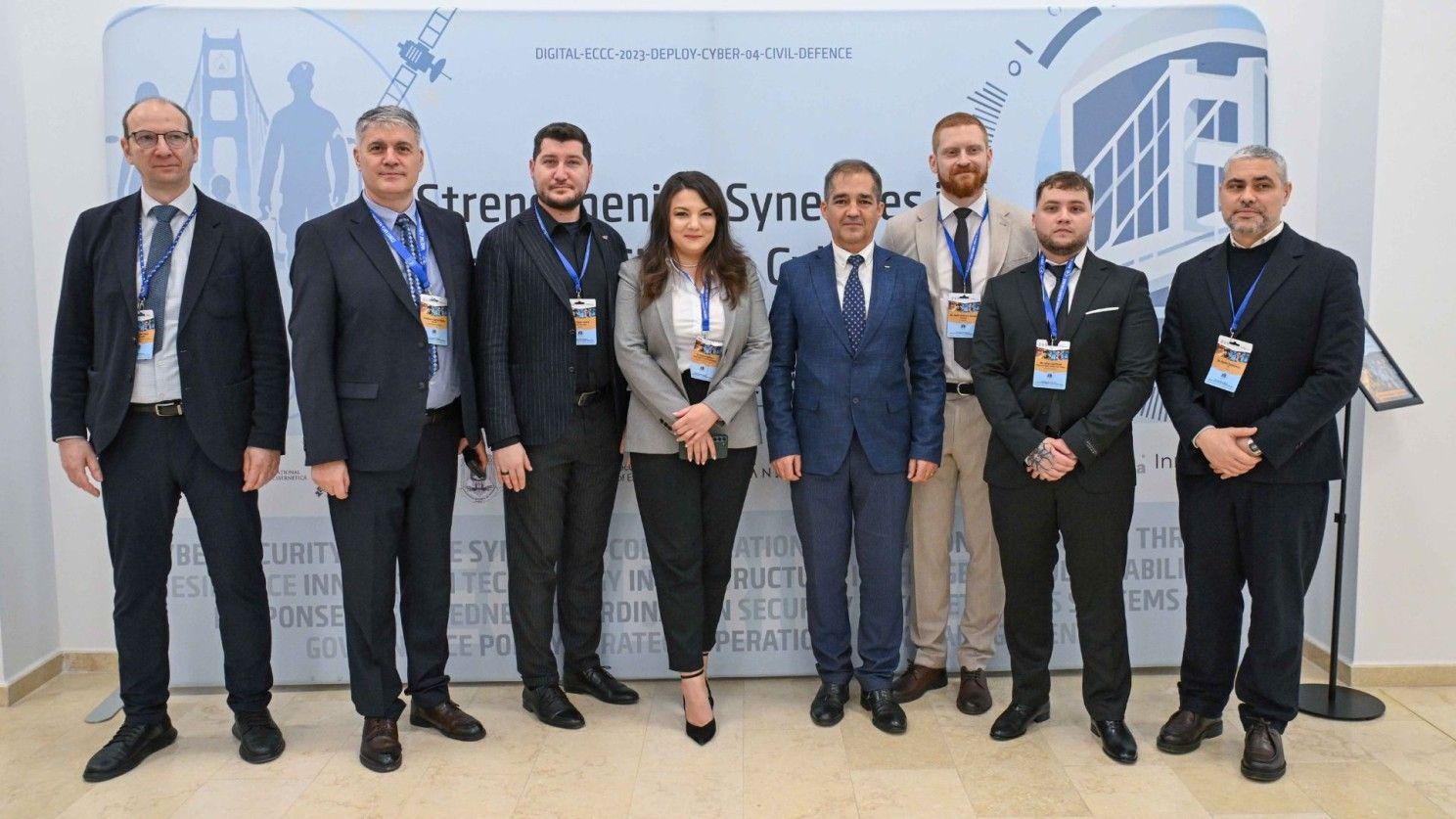
Day 3 was not just an ending—it was a call to action. As cybercrime grows more sophisticated and hybrid threats become the new normal, Europe must invest in legal harmonization, technological sovereignty, and operational readiness. The ECYBRIDGE Conference reaffirmed that resilience is a shared responsibility, and the time to act is now.
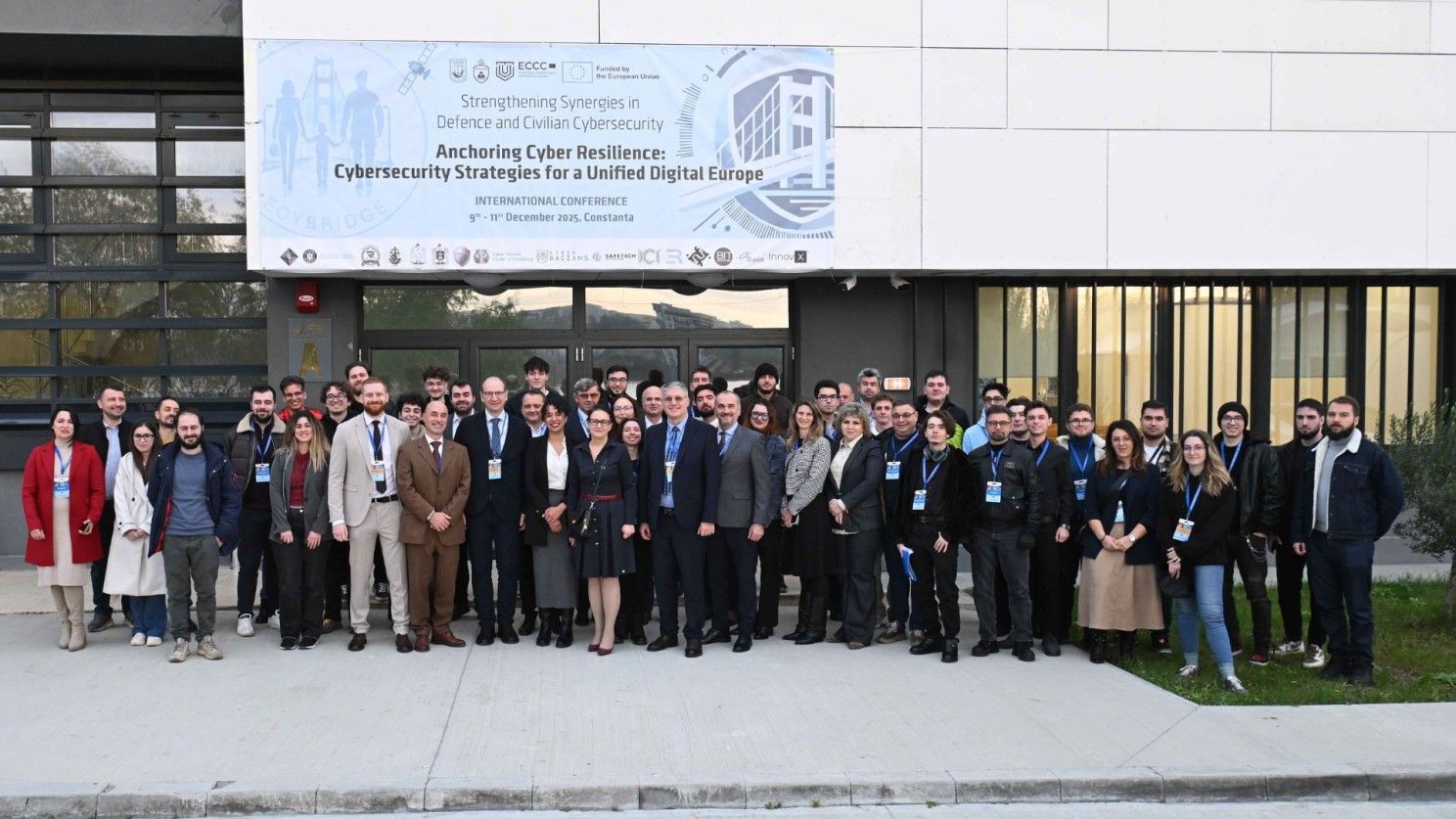
This conference was more than a series of panels—it was a catalyst for progress in Europe’s cybersecurity ecosystem. By bringing together leading experts from academia, industry, and defence, ECYBRIDGE created a unique platform for dialogue, collaboration, and knowledge exchange. It delivered actionable insights on hybrid threat mitigation, technological sovereignty, and workforce readiness, setting new benchmarks for strategic resilience and innovation. The value added to the industry lies in its ability to transform fragmented approaches into a unified vision for a secure, digitally empowered Europe.
The success of the ECYBRIDGE International Conference was made possible through the dedication, expertise, and collaboration of all ECYBRIDGE partners, whose sustained commitment continues to strengthen Europe’s cybersecurity ecosystem. Their support across research, dialogue, training, and policy-oriented initiatives reflects the very spirit of cooperation that cyber resilience requires.
As Europe navigates an era defined by cybercrime, hybrid threats, and rapid technological change, one message stands clear: resilience is not built in isolation. It emerges from trust, shared responsibility, and the courage to collaborate across borders, sectors, and disciplines.
Because in a fragmented threat landscape, our strongest defence remains our ability to think, act, and build together.